
Almanac today: 29 Nov 2026 · UTC+8 time zone
 小
Minor Snow
氣The twentieth of the twenty-four solar terms, signaling approaching first snow and colder weather.
- Zhongqi start in 2026
- Nov 2215:23
- Solar ecliptic longitude
- 240°
- Order of solar terms
- Winter · No. 20
Next Minor Snow: Nov 22, 2027 21:16, in 358 days (UTC+8 time zone)
What Is Minor Snow?Introduction
Minor Snow is winter's second solar term, following Beginning of Winter. The Collected Explanations of the Seventy-Two Pentads of the Monthly Ordinances (月令七十二候集解) explains that rain meets cold air and freezes into snow; ‘minor’ means it is not yet abundant, as snowfall is only beginning and amounts remain small.
‘Minor’ refers to the amount of snowfall, not its duration. The weather grows colder by the day, and the north begins to see its first snow.
Astronomy and Calendar
Minor Snow falls around Nov 22 or 23 in the Gregorian calendar and is the twentieth of the twenty-four solar terms.
The Sun reaches ecliptic longitude 240°, between Beginning of Winter and Major Snow, while daylight continues to shorten in the Northern Hemisphere.
Minor Snow: Zhongqi Start Times
| Year | Zhongqi start time (UTC+8 time zone) | |
|---|---|---|
| 2025 | Nov 22 Sat 09:36 | Past |
| 2026 | Nov 22 Sun 15:23 | Past |
| 2027 | Nov 22 Mon 21:16 | Upcoming |
| 2028 | Nov 22 Wed 02:54 | |
| 2029 | Nov 22 Thu 08:49 |
Solar ecliptic longitude: 240°. Each year's time is calculated astronomically to the nearest minute.
Season and Climate
Around Minor Snow, northwesterly winds are common in the north, with nighttime temperatures often below 0°C. Cold waves and strong cold-air outbreaks are relatively frequent. Areas north of the Yellow River see their first snow, generally in small amounts.
Farther south, the Yangtze–Huai region is only just taking on the appearance of early winter. Though the weather is cold, yellow and green citrus fruits retain a touch of late autumn.
Three Traditional PentadsThe Seventy-Two Pentads
- First pentad·虹藏不见(Rainbows disappear)
Rainbows no longer appear in the sky.
- Second pentad·天气上升地气下降(Heaven's qi rises and earth's qi descends)
Ancient people believed that yang qi rose and yin qi descended, so the qi of heaven and earth no longer connected.
- Third pentad·闭塞而成冬(Closure brings winter)
Heaven and earth close off, and the climate turns to true winter cold.
These three pentads come from the Collected Explanations of the Seventy-Two Pentads of the Monthly Ordinances.
Traditional Farming
The saying ‘Minor Snow seals the ground’ describes the deepening soil frost and rivers freezing in succession. Northern fruit growers prune trees and wrap their trunks against freezing. Winter vegetables are often stored in deep trenches or cellars; southern fishponds need overwintering management, and northern and high, cold regions need livestock feed ready for winter.
Many folk sayings concern farming and weather at Minor Snow. These are some widely known examples:
Minor Snow freezes the ground; Major Snow freezes the rivers.
Snow filling the sky at Minor Snow promises an abundant year ahead.
Harvest cabbages at Minor Snow and spinach at Major Snow.
Leave vegetables unharvested at Minor Snow, and frost will harm them.
No snow at Minor Snow or Major Snow means shriveled wheat and barley grains.
Seasonal Customs and Foods
Customs
- Curing porkWinter curing and air-drying
- Around Minor Snow, temperatures drop sharply and the air is dry. Many southern households begin making cured pork and sausages. Pork is cured in vats with salt, Sichuan pepper, star anise, cinnamon and other spices, then taken out after seven to fifteen days and hung to dry. It is ready to eat after about a month, just in time to keep for the New Year.
- Drying fishCentral and southern Taiwan
- Mullet schools enter the Taiwan Strait around Minor Snow, and fishers in central and southern Taiwan begin drying fish and storing preserved food. Fish are scaled and gutted, rubbed with toasted seasonings and left in a cool place. After being turned, they are hung in a ventilated spot for two or three months, then taken down, cut into pieces and sealed for storage.
Food
- Eating ciba rice cakesThe start of the tenth lunar month
- In southern China, ciba, pounded glutinous rice cakes, are traditionally eaten in the tenth lunar month. They were originally offerings made by farmers to the ox deity. A Hakka expression about piping-hot ciba describes winding glutinous rice dough around chopsticks, coating it in sesame, peanuts and sugar, and eating it hot. The round shape symbolizes harvest and reunion.
- Eating paotangThe Tujia people
- Around Minor Snow, Tujia people serve guests paotang made with fresh pork. Pork offal and fat are finely chopped, mixed with cooked glutinous rice, pig's blood and a little seasoning, stuffed into cleaned small intestines and boiled.
Life Today
Some southern regions still make cured foods and pound ciba at Minor Snow. Urban households more often buy them at markets or ask relatives and friends back home to send homemade smoked pork.
Intangible cultural heritage demonstrations and folk activities often offer hands-on experiences of winter food traditions such as pounding ciba and making cured meats, showing the connections between solar terms and food.
According to traditional health practices, the cold, gloomy weather and reduced sunshine at Minor Snow can trigger or worsen low mood, so one should relax and spend more time in the sun. Daily habits should include keeping warm, opening windows for ventilation when appropriate and drinking more water to prevent colds. Healthy people may continue moderate exercise to build cold tolerance. Food should offer warming nourishment; appropriate supplementation is said to help balance yin and yang. When choosing tonics, their properties and suitability should be distinguished, and cooling foods such as radishes and preserved eggs may be included to balance them. These are traditional folk and Chinese medicine beliefs, provided for cultural understanding only, and do not constitute medical advice.
Solar Terms of Winter
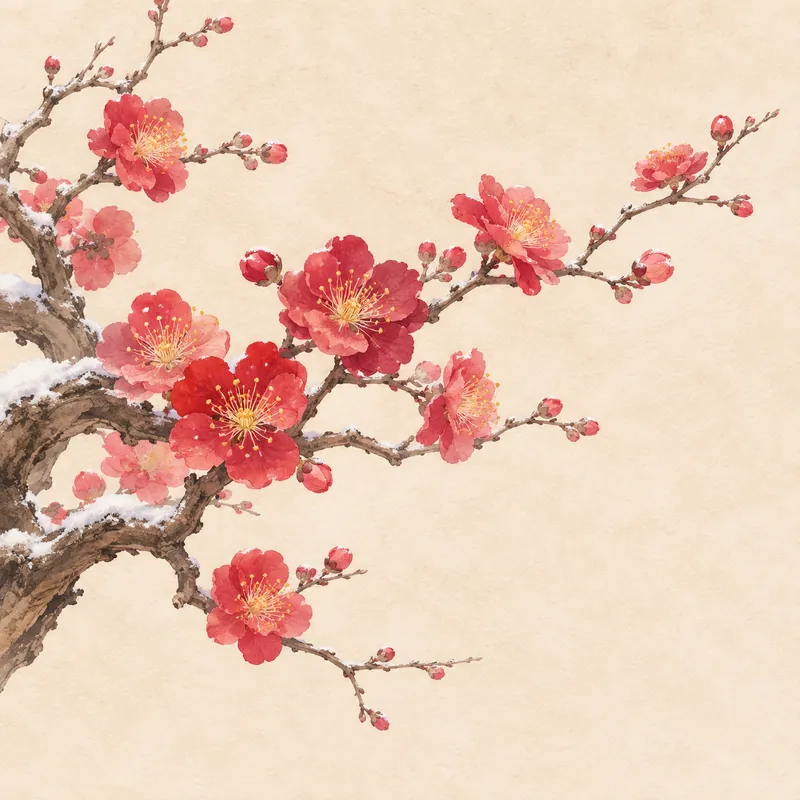
Source: China Intangible Cultural Heritage website Author: China Intangible Cultural Heritage Protection Center