
Almanac today: 29 Nov 2026 · UTC+8 time zone
 清
Clear and Bright
節The fifth solar term brings clear, bright weather and is also a traditional festival for honoring ancestors.
- Jie start in 2026
- Apr 502:40
- Solar ecliptic longitude
- 15°
- Order of solar terms
- Spring · No. 5
Next Clear and Bright: Apr 5, 2027 08:18, in 127 days (UTC+8 time zone)
What Is Clear and Bright?Introduction
Clear and Bright is the fifth of the twenty-four solar terms. The Qing-dynasty Records of the Seasons in Yanjing (燕京岁时记) explains its name by saying that everything growing at this time is fresh, clean and bright.
It is the only one of the twenty-four solar terms that is also a festival. Clear records of the solar term date to the Han dynasty, while Qingming (Tomb-Sweeping Day) developed as a festival in the Tang dynasty.
Astronomy and Calendar
Clear and Bright falls between Apr 4 and 6 in the Gregorian calendar, when the Sun reaches ecliptic longitude 15°, roughly around the first day of the third lunar month.
The ‘Patterns of Heaven’ chapter of the Western Han text Huainanzi (淮南子·天文训) states that fifteen days after Spring Equinox, when the Dipper points to yi, the clear-and-bright wind arrives: a fresh, clear wind.
Clear and Bright: Jie Start Times
| Year | Jie start time (UTC+8 time zone) | |
|---|---|---|
| 2025 | Apr 4 Fri 20:49 | Past |
| 2026 | Apr 5 Sun 02:40 | Past |
| 2027 | Apr 5 Mon 08:18 | Upcoming |
| 2028 | Apr 4 Tue 14:03 | |
| 2029 | Apr 4 Wed 19:58 |
Solar ecliptic longitude: 15°. Each year's time is calculated astronomically to the nearest minute.
Season and Climate
At Clear and Bright, the climate warms, plants sprout and the weather is clear and bright. Northern China warms quickly but has little precipitation; dry, windy conditions make dusty weather common. Rainfall remains low north of the Yellow River–Huai River Plain, so spring drought is a concern.
South of the Yangtze, skies alternate between cloud and sunshine, and rainfall increases noticeably in the river's middle and lower reaches. This is the region described by the verse about rain falling steadily at Qingming.
Three Traditional PentadsThe Seventy-Two Pentads
- First pentad·桐始华(Tong trees begin to flower)
Tong trees begin to blossom.
- Second pentad·田鼠化为鴽(Field mice turn into quail)
People once thought field mice turned into quail-like birds. In fact, sun-loving birds become active while field mice return to their burrows.
- Third pentad·虹始见(Rainbows begin to appear)
Rainbows begin to appear after rain.
- Fourth pentad·萍始生(Duckweed begins to grow)
Duckweed begins growing on the water's surface.
The source lists four seasonal signs. In the usual seventy-two-pentad system, Clear and Bright has only the first three; ‘Duckweed begins to grow’ belongs to the first pentad of Grain Rain.
Traditional Farming
At Clear and Bright, daily average temperatures have risen above 12°C in most regions except northeastern and northwestern China. Spring cultivation is underway north and south of the Yangtze and on both sides of the Great Wall. South of the Yellow River–Huai River region, wheat is approaching booting and rapeseed is in full flower. Many fruit trees begin flowering and need attention to assisted pollination. New tea shoots are growing rapidly, and famous tea-producing areas begin harvesting in succession.
Many sayings concern farming at Clear and Bright. Common examples include:
Around Clear and Bright, sow melons and beans.
At Clear and Bright, wheat grows three stem joints.
Tea before Clear and Bright: two tender leaves.
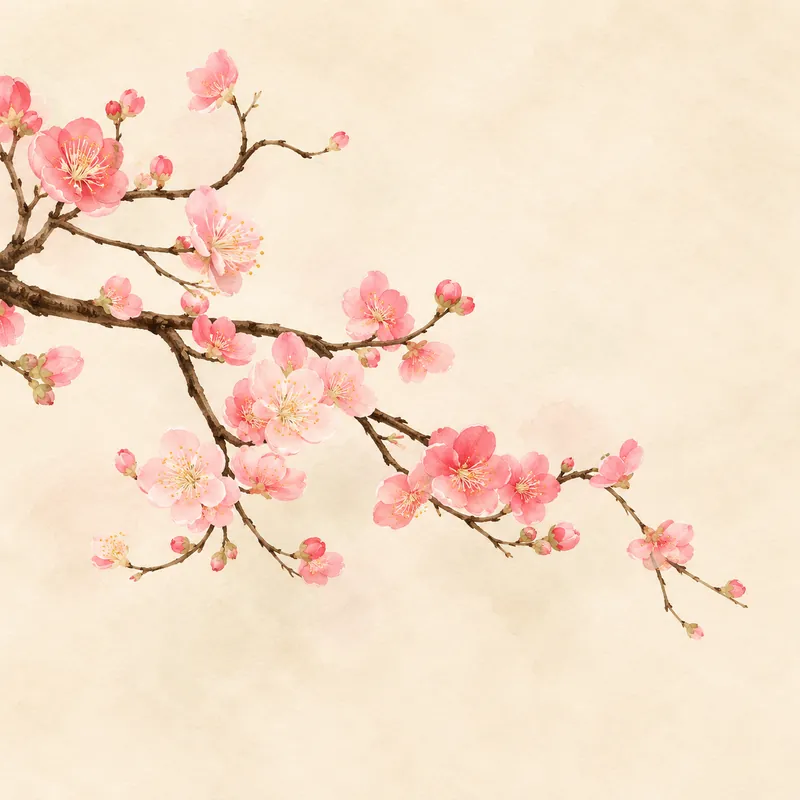
When pear blossoms stir in the wind, it is Clear and Bright.
Seasonal Customs and Foods
Customs
- Tomb sweeping
- Qingming is a festival for remembering ancestors. Worship and spring outings mainly derive from the Cold Food Festival and the Shangsi Festival. At the Cold Food Festival, fires were forbidden and cold food was offered at graves; at Qingming, fresh fire was kindled and people went out. After the Tang dynasty, tomb sweeping shifted from the Cold Food Festival to Qingming. After the Song dynasty, the Cold Food and Shangsi festivals gradually merged into Qingming.
- Spring outings
- Spring outings were formerly called ‘exploring spring’ or ‘seeking spring’. As spring returns and everything sprouts around Clear and Bright, people maintain a longstanding custom of excursions into the countryside.
- Swinging
- Swinging is an ancient Qingming custom. Swings were first called qianqiu, later changed to qiuqian to avoid a naming taboo. Early swings often had frames made of branches with colored ribbons attached; later they developed into a seat suspended from two ropes and remain popular with children.
- Wearing willow branches and planting trees
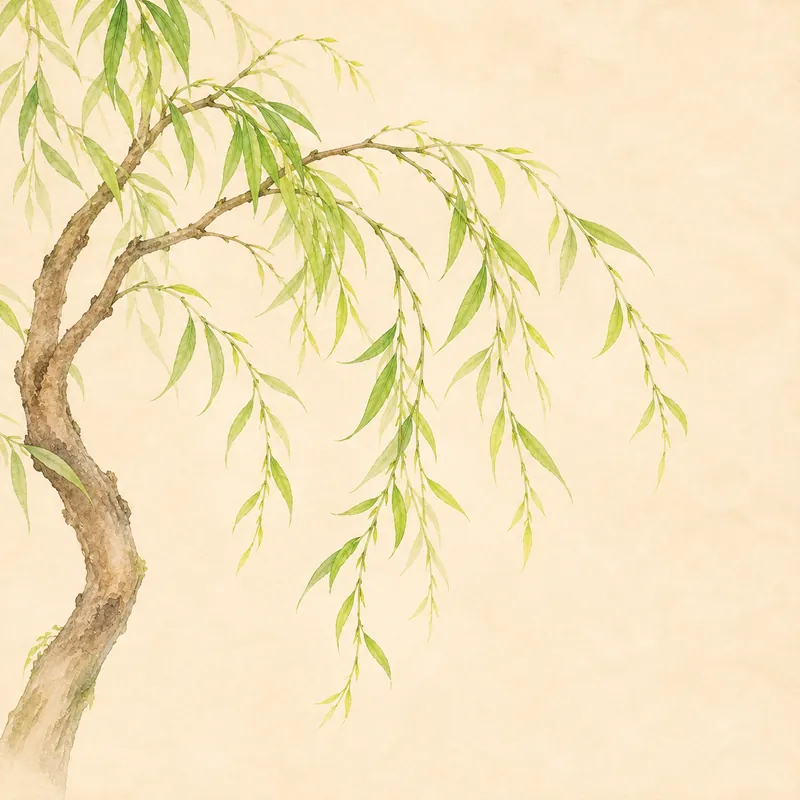
- During tomb sweeping and spring outings, women and children weave newly sprouted willow twigs into wreaths to wear on their heads. Willows are believed to ward off evil and protect people. They also grow readily: ‘An unplanned willow cutting becomes a shady tree.’ The custom of planting trees at Qingming gradually developed from this.
- Flying kites
- People fly kites by day and night around Clear and Bright. At night, small colored lanterns hang from the kites and twinkle like stars, earning the name ‘divine lights’. In the past, some people cut the strings after launching their kites, letting them drift away to carry off illness and misfortune.
Food
- Qingtuan: green rice dumplings
- Around Shanghai, people eat qingtuan at Qingming. Juice from bromus grass is pounded with glutinous rice, filled with sweet bean or jujube paste, and steamed on reed leaves, producing bright green dumplings.
- Cold foods
- Under the influence of the Cold Food Festival, some places still eat cold food at Qingming. In Jimo, Shandong, people eat eggs and cold steamed buns; in Tai'an, they eat cold pancakes wrapped around raw bitter greens.
- Zifu: festive steamed bread
- In southern Shanxi, large wheat-flour buns are steamed at Qingming with walnuts, jujubes and beans inside. The outside is coiled into a dragon shape, with an egg set into its body. Called zifu, the bread is first offered to ancestors during tomb sweeping and then shared by the family.
Life Today
Qingming still centers on ancestral visits and spring outings. Many people return to their hometowns to sweep graves and reunite with family.
Intangible cultural heritage demonstrations also introduce Qingming customs such as kite flying and making qingtuan. The period around Clear and Bright is also the season for harvesting spring tea and planting trees.
According to traditional health practices, traditional Chinese medicine holds that liver qi grows stronger as spring deepens after Beginning of Spring and peaks around Clear and Bright. Excessive liver qi can affect the spleen and stomach, impede digestion and absorption, and cause emotional imbalance and poor circulation of qi and blood. High blood pressure and respiratory diseases are also common during this period. Clear and Bright is rainy, damp and subject to renewed cold after warm spells. Food should be warming; seasonal vegetables such as Chinese chives, sweet potatoes, Chinese cabbage, radishes and taro are considered suitable. Shepherd's purse, spinach and Chinese yam are also encouraged as foods that protect the liver and nourish the lungs. People with hay fever should take care to prevent allergies, protect themselves and avoid pollen where possible; flower-viewing outings are best timed away from peak pollen periods. These are traditional folk and Chinese medicine beliefs, provided for cultural understanding only, and do not constitute medical advice.
The Six Solar Terms of Spring
Source: China Intangible Cultural Heritage website Author: China Intangible Cultural Heritage Protection Center