
Almanac today: 29 Nov 2026 · UTC+8 time zone
 夏
Summer Solstice
氣The Northern Hemisphere's longest day, heralding midsummer and the hottest summer days.
- Zhongqi start in 2026
- Jun 2116:25
- Solar ecliptic longitude
- 90°
- Order of solar terms
- Summer · No. 10
Next Summer Solstice: Jun 21, 2027 22:11, in 204 days (UTC+8 time zone)
What Is Summer Solstice?Introduction
Summer Solstice is the tenth of the twenty-four solar terms. On this day, the Northern Hemisphere has its longest daylight hours, increasing farther north.
Summer Solstice was an important festival in ancient times, when people worshipped deities and prayed for blessings. The ‘Treatise on the Feng and Shan Sacrifices’ in Records of the Grand Historian (史记·封禅书) records music and dance accompanying sacrifices to the earth on Summer Solstice. Zhou-dynasty worship on this day is said to have sought to drive away epidemics and famine.
Astronomy and Calendar
Summer Solstice falls on Jun 21 or 22 each year in the Gregorian calendar. The subsolar point reaches its northernmost position of the year, almost directly over the Tropic of Cancer. Its precise time varies slightly each year.
It is summer's fourth solar term and the day with the longest daylight and shortest night. Afterward, the subsolar point gradually moves south and days slowly shorten.
Summer Solstice: Zhongqi Start Times
| Year | Zhongqi start time (UTC+8 time zone) | |
|---|---|---|
| 2025 | Jun 21 Sat 10:42 | Past |
| 2026 | Jun 21 Sun 16:25 | Past |
| 2027 | Jun 21 Mon 22:11 | Upcoming |
| 2028 | Jun 21 Wed 04:02 | |
| 2029 | Jun 21 Thu 09:48 |
Solar ecliptic longitude: 90°. Each year's time is calculated astronomically to the nearest minute.
Season and Climate
After Summer Solstice, most regions have high temperatures, abundant sunlight and rapid crop growth. The hottest time of year usually arrives another twenty or thirty days later.
‘Count the third geng day after Summer Solstice to begin the first fu’: the three fu periods, the hottest part of the year, begin around this time and run roughly from mid-July to mid-August. The Yangtze–Huai River region is in its plum-rain season, with humid air and persistent rain.
Three Traditional PentadsThe Seventy-Two Pentads
- First pentad·鹿角解(Deer shed their antlers)
At Summer Solstice, yin energy begins to emerge and yang energy starts to decline, and deer begin shedding their antlers.
- Second pentad·蜩始鸣(Cicadas begin to sing)
After Summer Solstice, cicadas move their wings and begin to call.
- Third pentad·半夏生(Pinellia begins to grow)
The shade-loving medicinal plant pinellia emerges in midsummer marshes and rice paddies.
These three pentads come from the Collected Explanations of the Seventy-Two Pentads of the Monthly Ordinances (月令七十二候集解).
Traditional Farming
Crops grow rapidly around Summer Solstice, along with weeds and pests, making field management particularly important. Rainfall greatly affects yields, hence the saying ‘Raindrops at Summer Solstice are worth a fortune.’
Farming experience has been distilled into many sayings:
Raindrops at Summer Solstice are worth a fortune.
Weeds in cotton fields at Summer Solstice are worse than a venomous snakebite.
Thunder at Summer Solstice brings hot fu days; no rain at the Double Ninth Festival brings a clear winter.
Sorghum at Clear and Bright, millet at Grain Buds; sesame at Grain in Ear, beans at Summer Solstice.
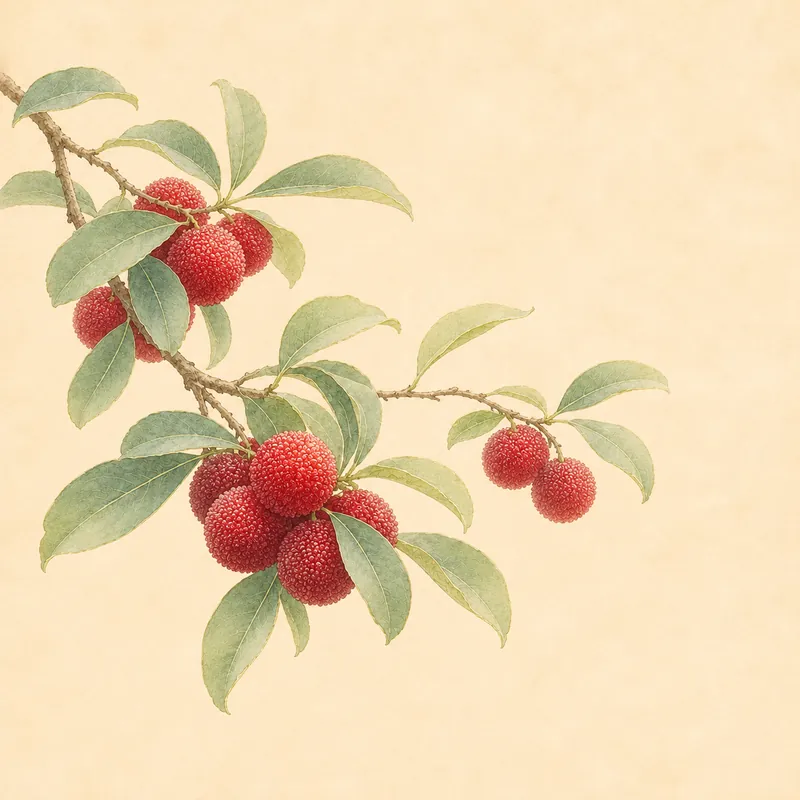
Bayberries turn the hills red at Summer Solstice; by Minor Heat, they may be worm-eaten.
Seasonal Customs and Foods
Customs
- Observing Summer SolsticeShaoxing, Zhejiang
- In Shaoxing, Zhejiang, families of all means traditionally worshipped ancestors on Summer Solstice, calling this ‘observing Summer Solstice’. A plate of cakes made with shredded cattail shoots was added to the usual offerings.
- Offering new wheatLaiyang and Huangxian, Shandong
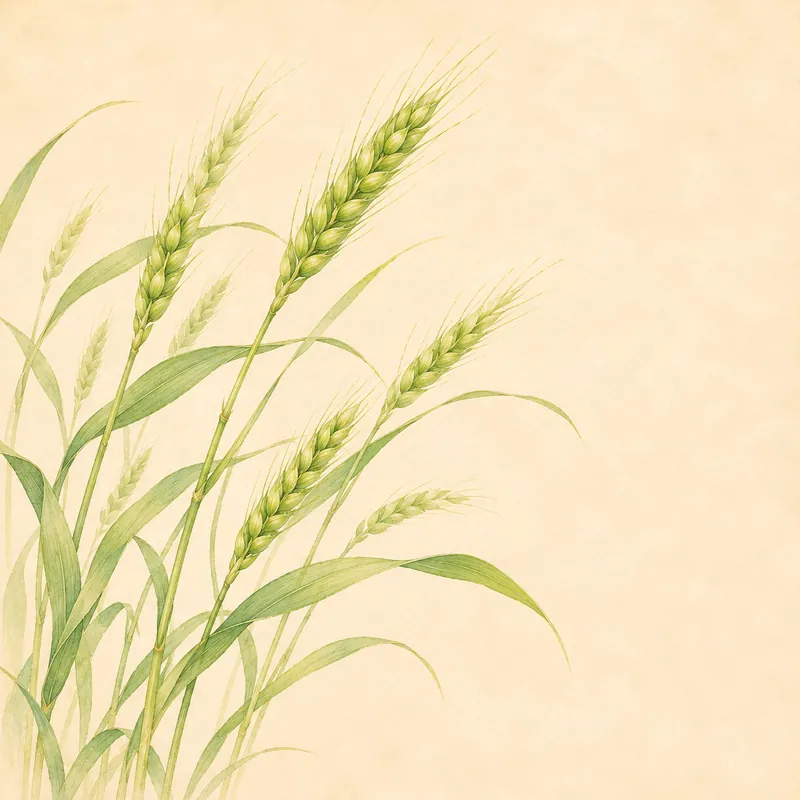
- Around Laiyang, Shandong, new wheat is offered in worship on Summer Solstice. Around Huangxian, people boil and eat newly harvested wheat grains. Children weave small strainers from wheat straw and repeatedly scoop grains from the soup, turning eating into a game characteristic of rural life.
- Watching white nights in MoheMohe, Heilongjiang
- Mohe is China's northernmost region. Around Summer Solstice, it experiences very long days and short nights, described as polar daylight, and is called a ‘city without night’. The days around the solstice are often clear, making the northern lights relatively easier to see. Visitors go to Beiji Village to experience white nights and light riverside bonfires that last until dawn.
Food
- Summer Solstice noodles
- ‘Dumplings at Winter Solstice, noodles at Summer Solstice’: eating noodles on Summer Solstice is customary in Beijing. Across Shandong, people commonly eat cold noodles, known as ‘water-rinsed noodles’, said to reduce internal heat and stimulate appetite without being excessively cooling.
- WontonsWuxi, Jiangsu
- In Wuxi, people eat wheat porridge in the morning and wontons at midday on Summer Solstice. The wontons symbolize harmony through a play on words. A saying goes, ‘Wontons at Summer Solstice, rice balls at Winter Solstice: health through the seasons and family reunion.’ Children are also weighed after eating wontons, in the hope that they will grow well.
Life Today
Summer Solstice is the year's longest day, and many people still eat a bowl of noodles on this occasion. Many places in the south also keep the custom of eating wontons and wheat porridge.
In high-latitude regions such as Mohe, the white nights around Summer Solstice have become a seasonal sight.
According to traditional health practices, yang energy is strongest at Summer Solstice, so it should be protected in keeping with nature. Going to bed later and rising early is recommended, with a suitably timed midday rest to relieve fatigue. Exercise need not stop, but should take place in cool, fresh air in the early morning or evening. In the Yangtze–Huai River region, Summer Solstice coincides with the damp, rainy plum-rain season, when belongings readily grow mold and mosquitoes and intestinal pathogens multiply quickly. Particular attention is therefore given to food hygiene and preventing infectious illness. Diet emphasizes bitter foods: traditional Chinese medicine regards most bitter vegetables as heat-clearing, including bitter melon, whose sweet aftertaste is associated with clearing internal fire, relieving summer heat and improving appetite, as well as Chinese leaf lettuce, stem lettuce and celery. Healthy people who sweat heavily may also drink some bitter beverages. Mung bean soup is a traditional folk remedy for summer heat, credited with clearing heat and toxins and relieving thirst and heat, but people with a deficient-cold constitution are advised not to drink it frequently. These are traditional folk and Chinese medicine beliefs, provided for cultural understanding only, and do not constitute medical advice.
The Six Solar Terms of Summer
Source: China Intangible Cultural Heritage website Author: China Intangible Cultural Heritage Protection Center